sharperatios.com

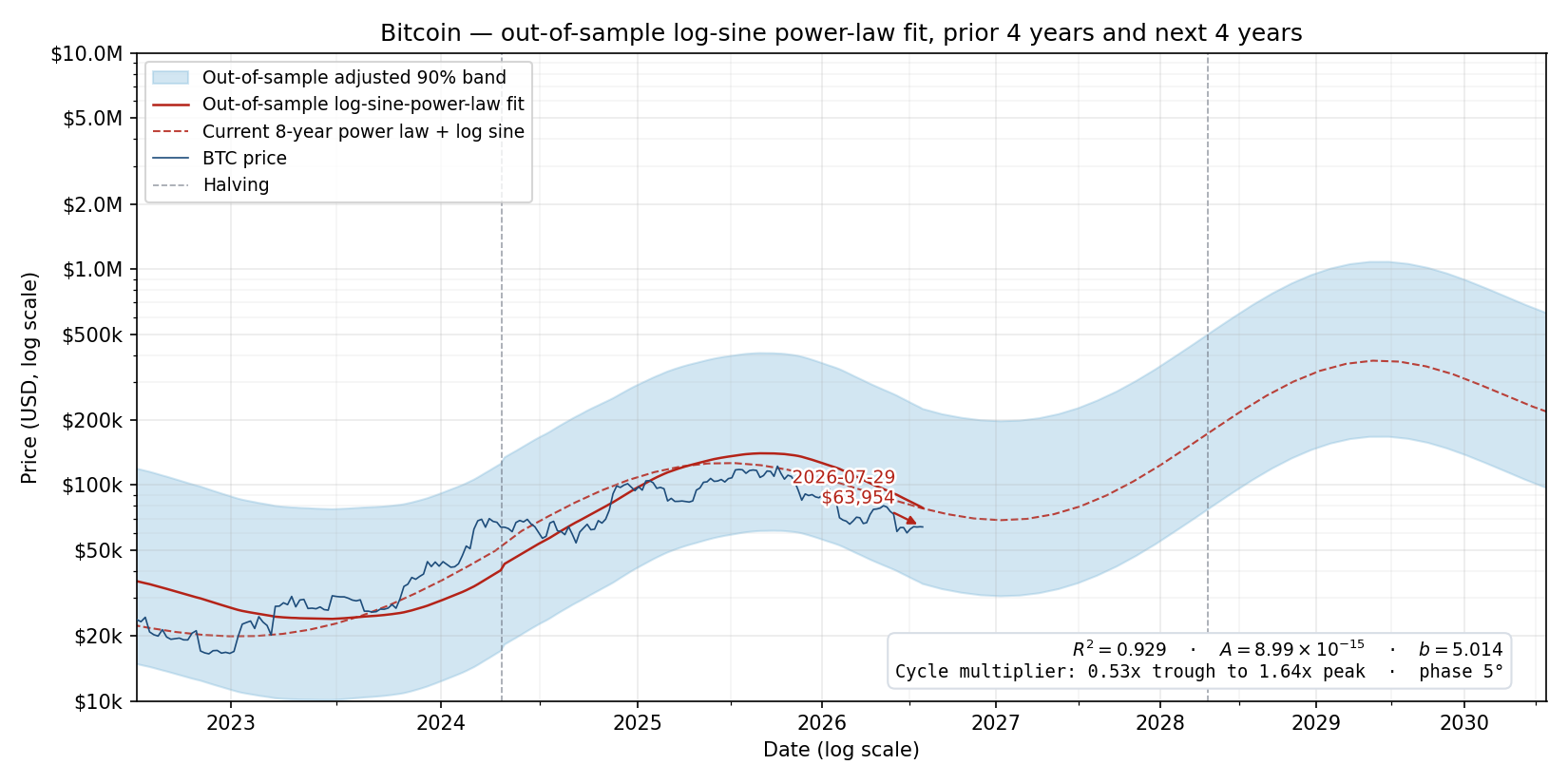
Weekly Bitcoin prices fitted to the Bitcoin power law, with a four-year halving-cycle log-sine adjustment fit only from prior out-of-sample power-law residuals. Historical adjusted ratios are out-of-sample: the current point is not included in its own sine fit. The adjusted model is listed separately on the Forecasts and mean-reversion pages. The log-sine component can be discontinuous at halving dates because the sine curve assumes exactly four years per cycle, while the actual halving date can arrive earlier or later.

Loading…
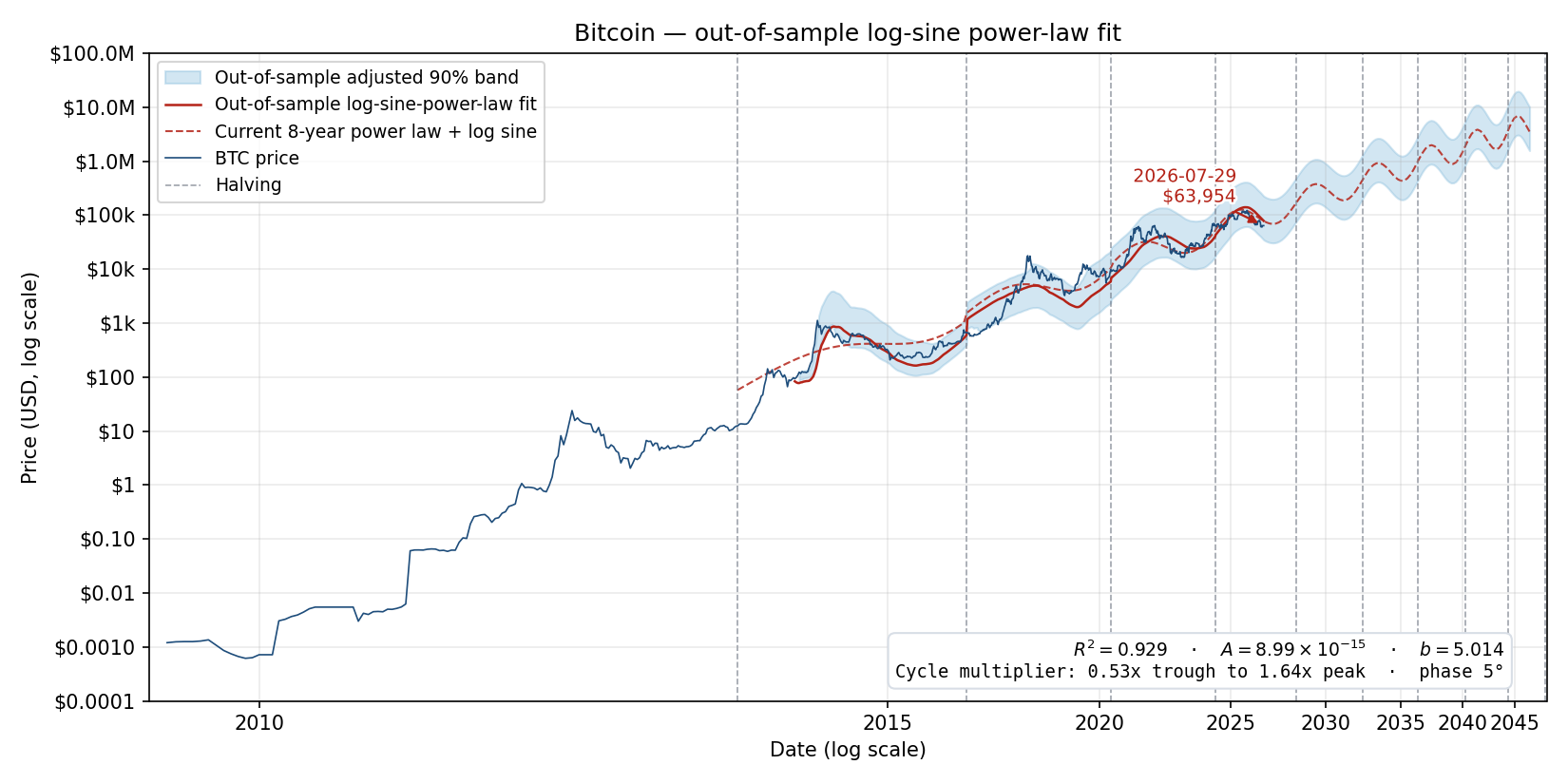
Bitcoin price with out-of-sample log-sine halving-era power-law model
Bitcoin price with out-of-sample log-sine halving-era power-law model over the prior four years and next four years

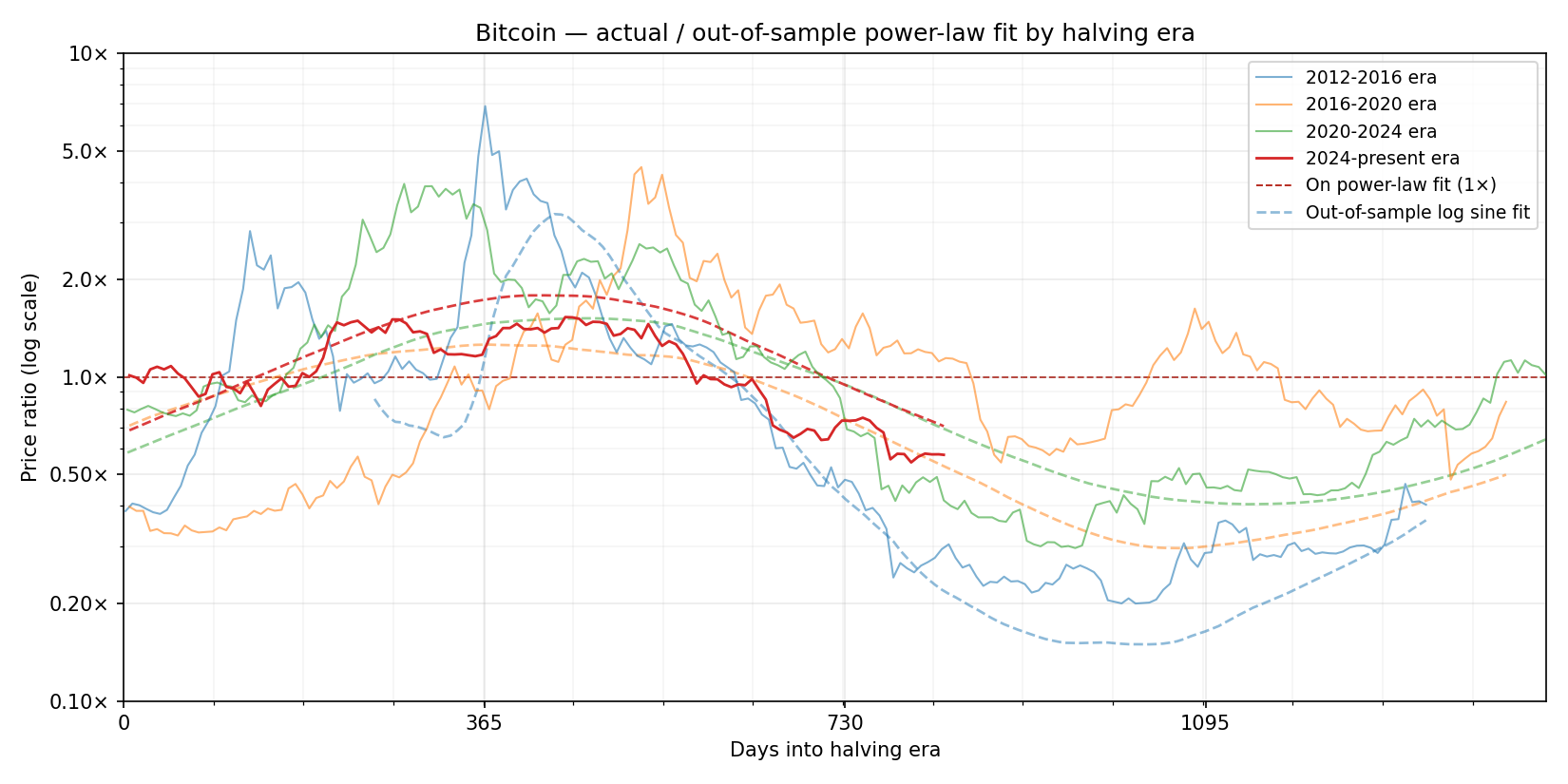
Historical ratio of Bitcoin price to out-of-sample power-law fitted price split by halving era, with days into era on the x axis

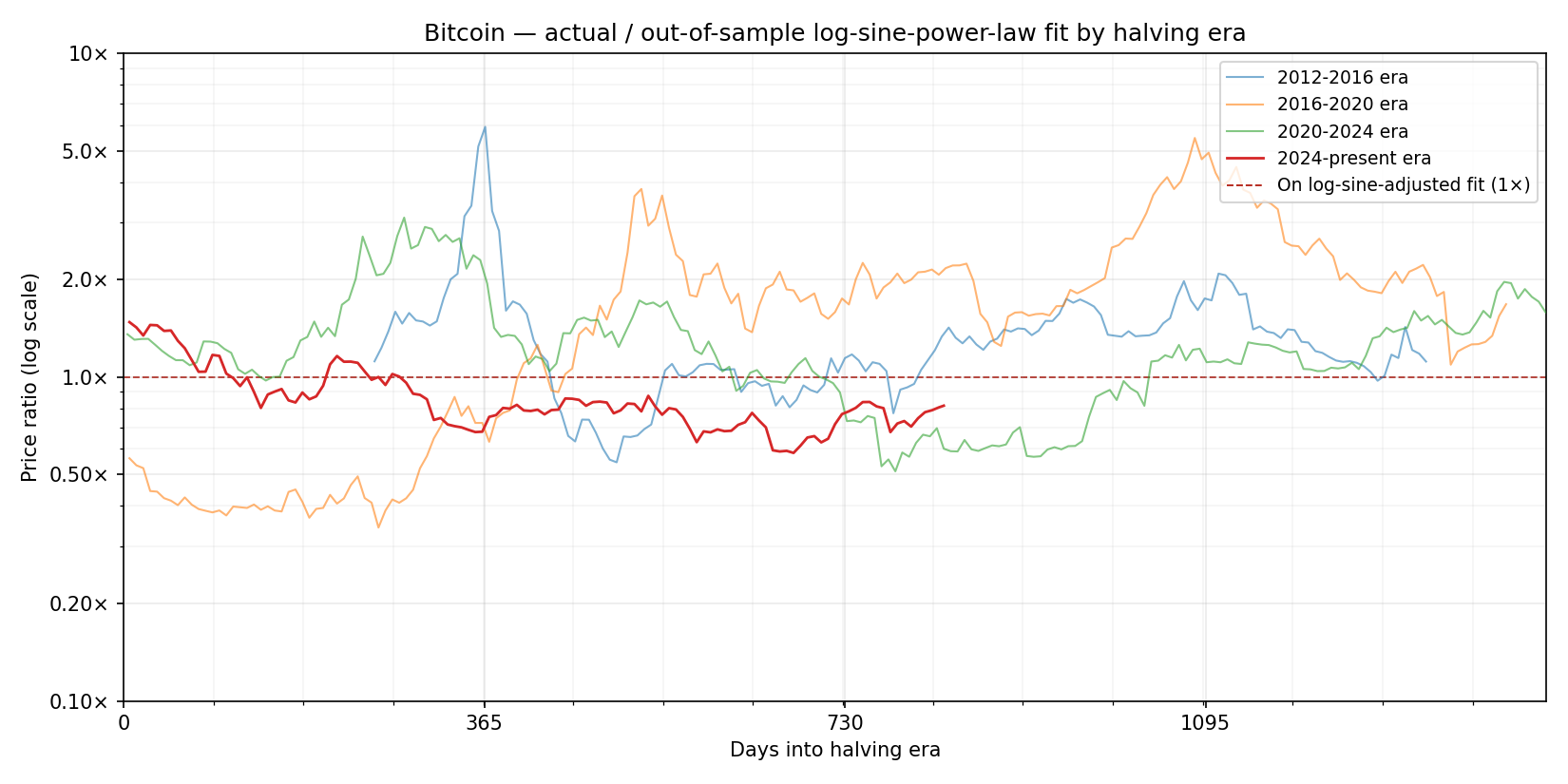
Historical ratio of Bitcoin price to out-of-sample log-sine-power-law fitted price split by halving era, with days into era on the x axis
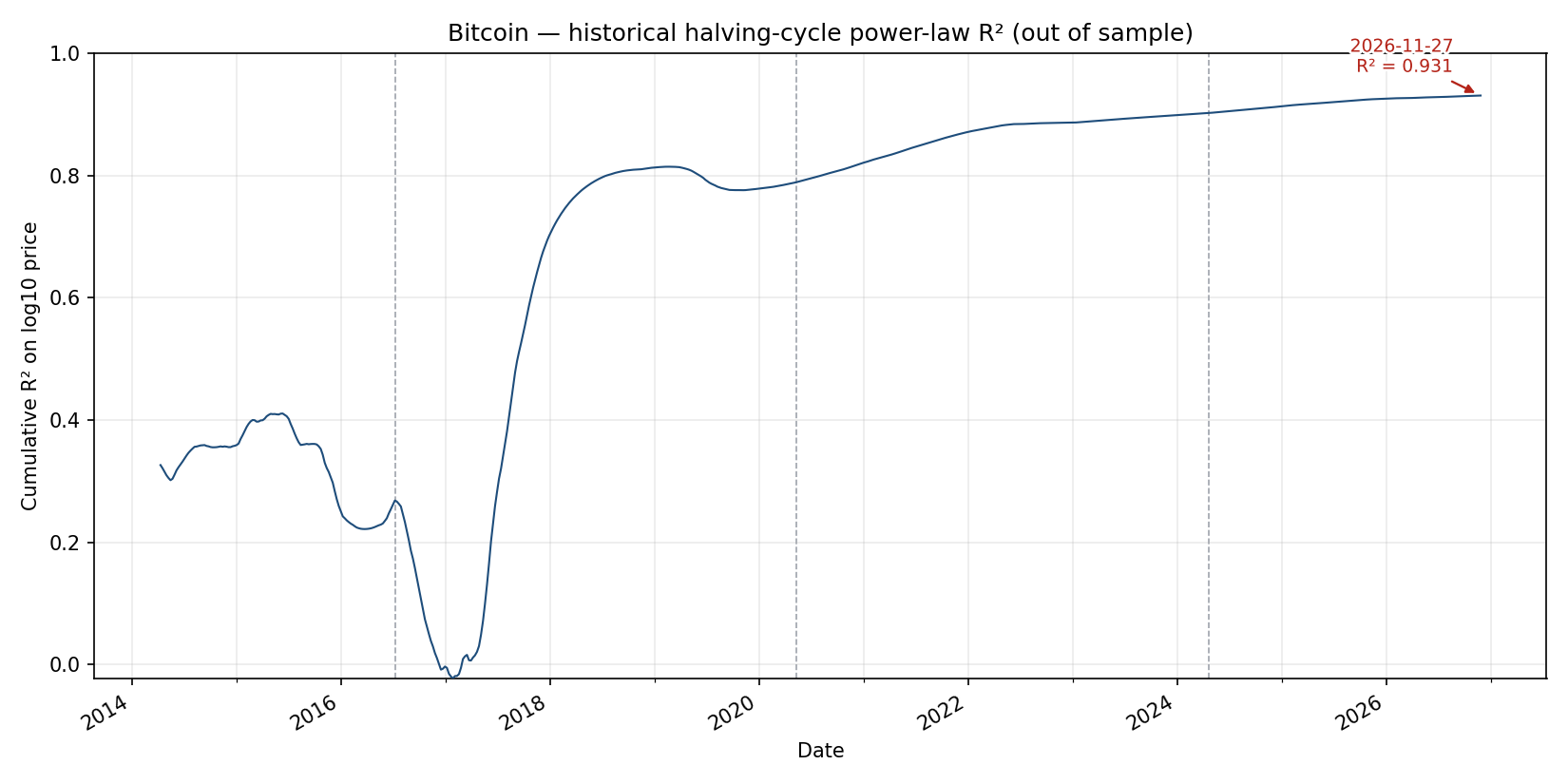
Historical Bitcoin halving-cycle power-law R squared on log10 prices from out-of-sample predictions

R² uses the halving-cycle model's out-of-sample predictions on log10 prices, accumulated through each date after at least 36 predictions.

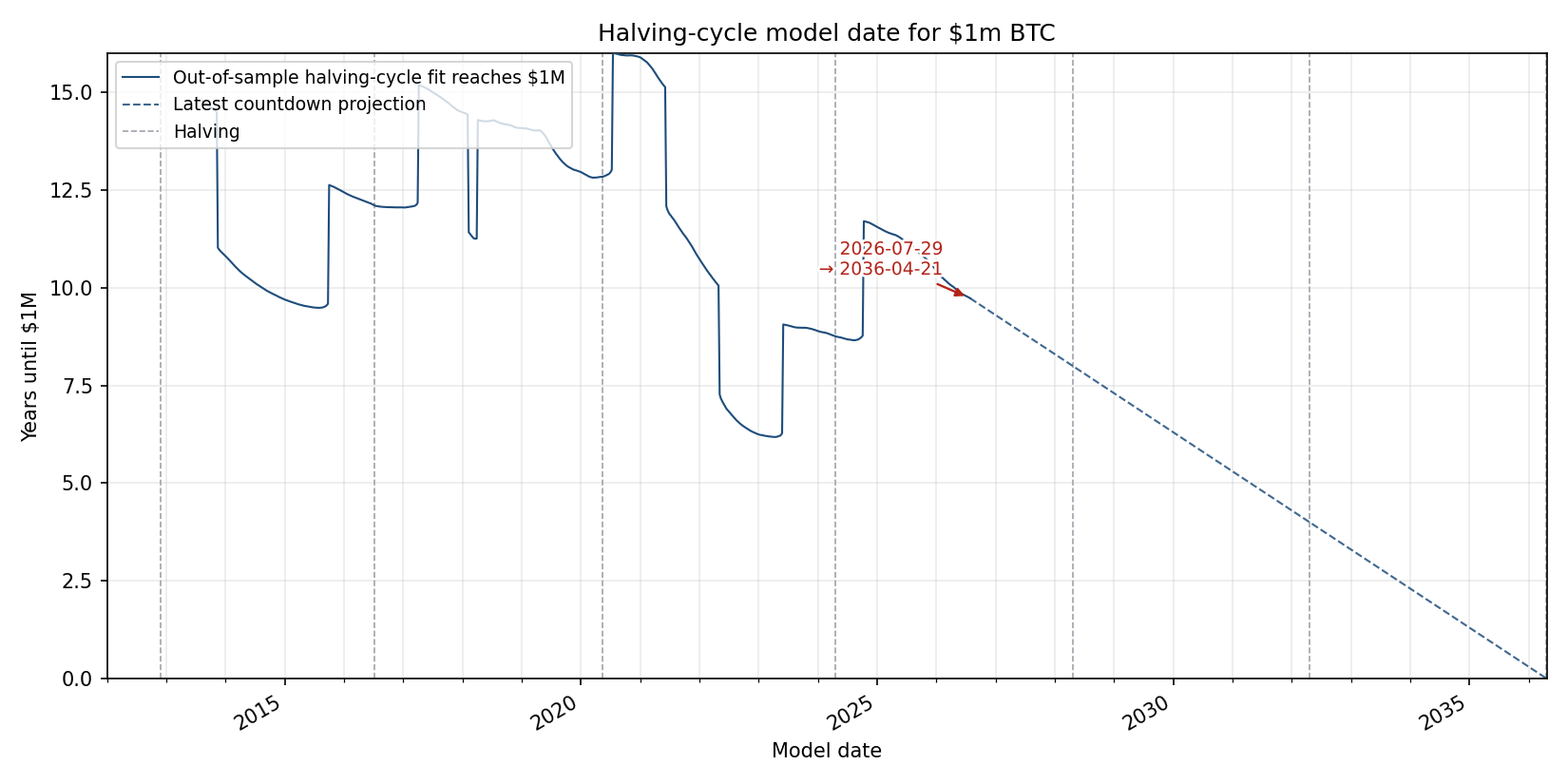
Out-of-sample halving-cycle power-law model date versus years until one million dollars per bitcoin
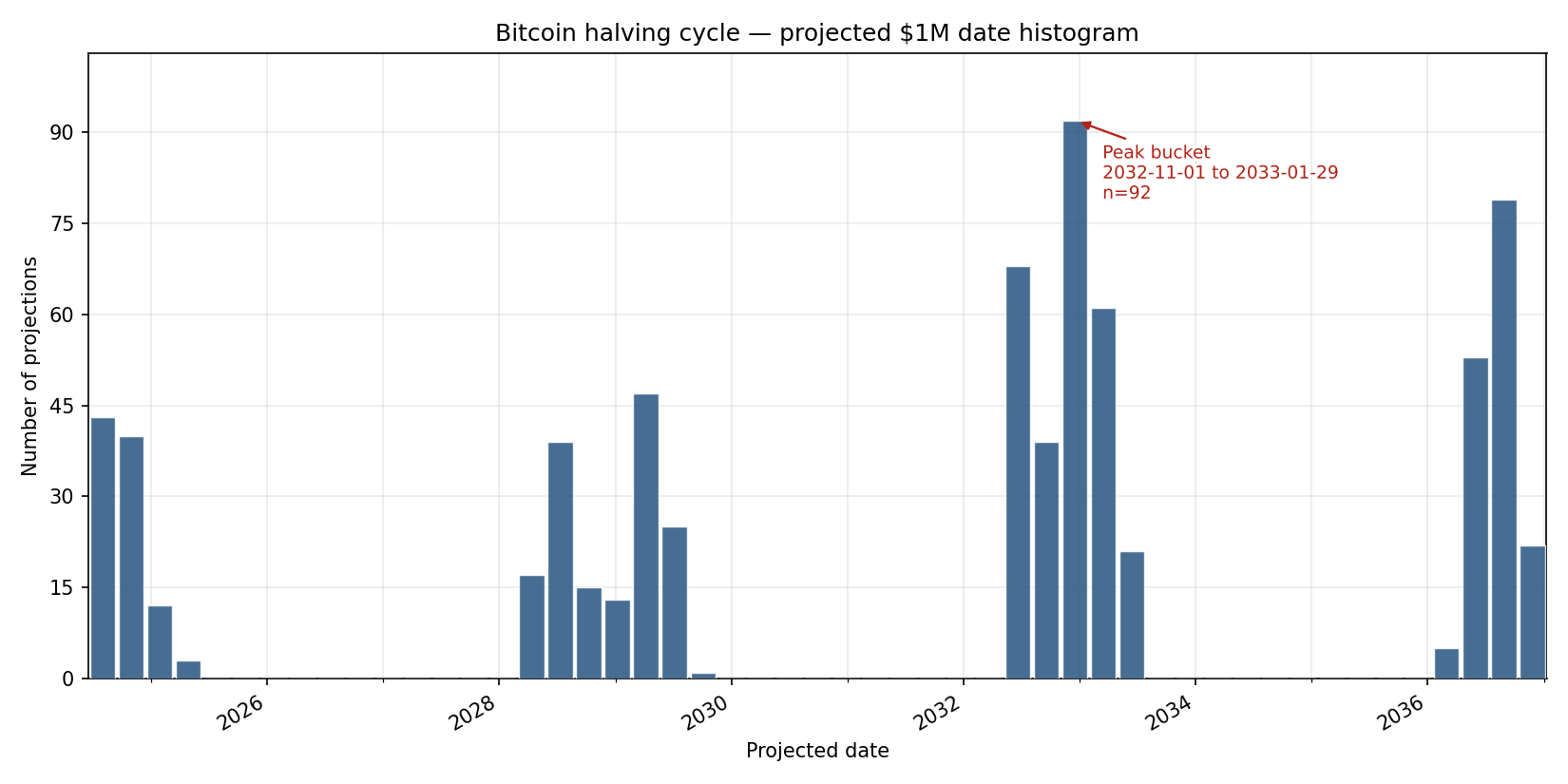
Histogram of projected dates when out-of-sample Bitcoin halving-cycle power-law fits first reach one million dollars per bitcoin

The $1M date can be discontinuous because the halving-cycle adjustment is cyclical: a projection may first reach $1M near the top of one cycle, or if that peak falls short after the fit changes, it may need to wait until the next cycle peak.